

Pleniko Blog
The Technologies Behind Reliable Digital Products
- Symfony
- React
- Next.js
- Database
- Version Control
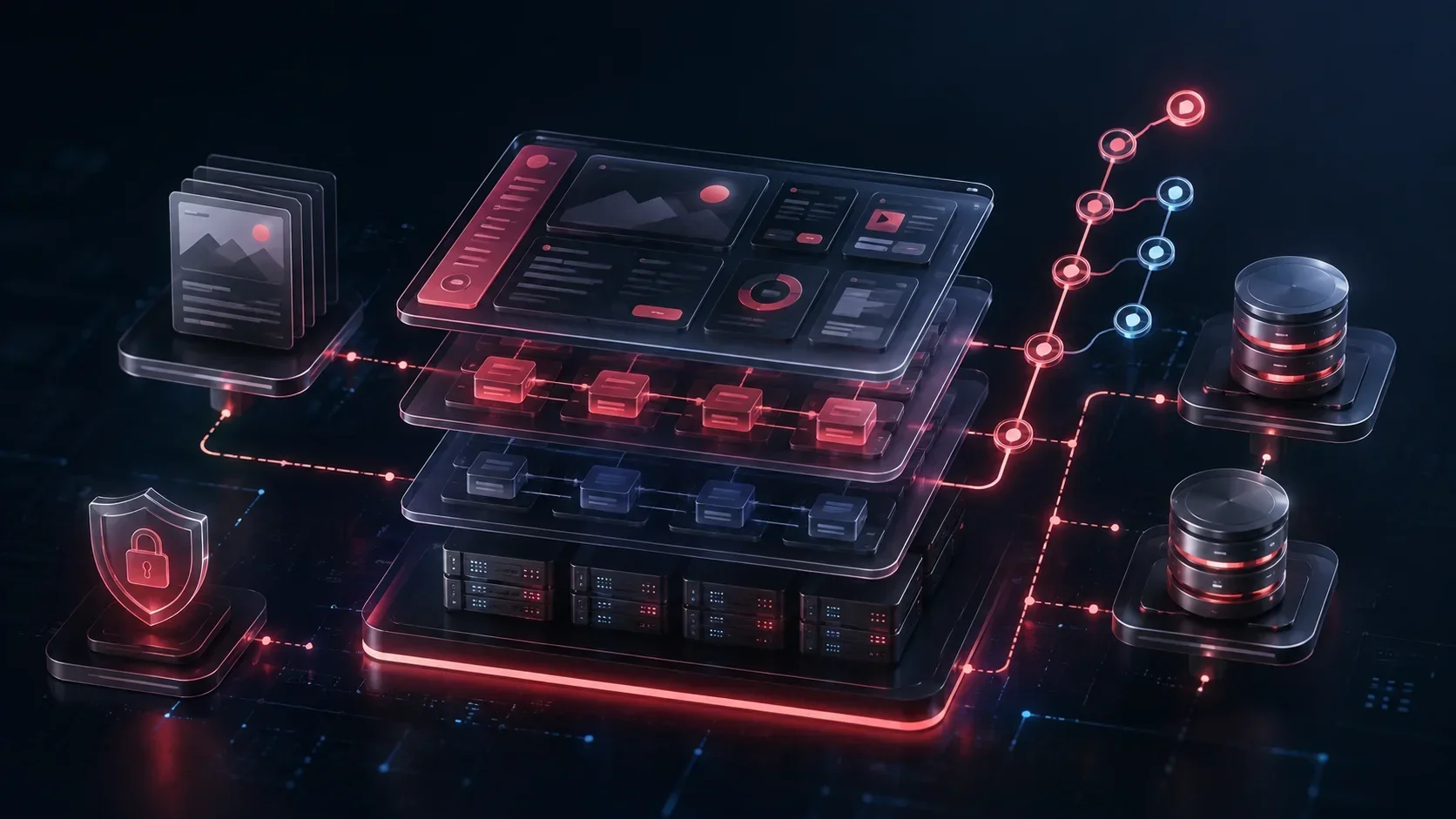
Building a high-quality digital product does not begin with its visual design. It begins with choosing the right technologies. These choices determine whether a system will be fast, secure, maintainable and ready for future growth.
A technology stack should therefore be selected not only according to current trends, but also according to the project’s goals, expected workload and long-term business requirements.
Symfony 7.4 LTS – a stable backend foundation
Symfony 7.4 LTS is often selected as the foundation of the server-side application. It is a modern, long-term support release suitable for corporate websites as well as complex business platforms.
The backend manages the application’s business logic, users, access permissions, payments, integrations and data processing. Symfony provides a clear structure and established security mechanisms, allowing a project to grow in an organised and maintainable way.
Long-term support is particularly valuable for business applications because it provides predictability, security updates and a longer, more stable lifecycle.
React – modern and interactive user interfaces
React is used to build the dynamic part of the product that users see and interact with. Its component-based architecture allows an interface to be divided into independent and reusable elements.
This makes it suitable for responsive administration panels, customer portals, reservation systems, online catalogues and other interactive applications.
React also has a large and actively maintained ecosystem. This makes it easier to introduce modern functionality and gradually extend the interface as the needs of the business evolve.
Next.js – improved performance and a strong SEO foundation
When search engine visibility is important, Next.js is a natural addition to React.
Its pre-rendering capabilities allow page content to be prepared before a visitor opens the website. This can improve loading performance while making public content easier for search engines to access and understand.
The technology does not automatically guarantee high search rankings. However, it provides a strong technical foundation for SEO through fast pages, properly structured content, metadata management and optimised public pages.
A database engine selected for the project
There is no single database that is the best choice for every digital product. The appropriate database engine depends on the type of information being stored, the expected number of users, the workload, reporting requirements and future plans for the system.
PostgreSQL may be the right choice for one project, while MySQL or a more specialised solution may be more suitable for another. The way the database is designed, secured and maintained is more important than the name of the technology itself.
Particular attention should be paid to access control, protection of sensitive information, security updates, monitoring and the ability to recover data after an incident.
Multiple backups every day
Data is often one of the most valuable assets of a digital product. Hardware failures, human mistakes, unsuccessful updates or malicious attacks can have serious consequences without a reliable recovery process.
Backups should therefore be created automatically several times per day, depending on the type of system and how frequently its information changes.
A reliable backup strategy involves more than simply creating copies. Backups must be stored securely, monitored for failures and regularly tested to confirm that they can actually be used to restore the system.
Version control – traceable and controlled development
Every change made during software development should be traceable. Version control maintains a history of what was changed, when it was changed and why the change was introduced.
New features can be developed separately and reviewed before they become part of the main product. Versioning should cover not only the source code but also important database structure changes, configuration updates and deployment processes.
This approach reduces the risks associated with releasing updates and makes problems easier to identify. When necessary, a specific change can be examined or an earlier stable version can be restored.
Technology is a tool, not the final objective
Using a new technology is valuable only when it delivers a practical benefit—better performance, stronger security, easier maintenance or an improved user experience.
Every technology choice should therefore reflect the actual needs of the project. The combination of a stable backend, a modern interface, search-optimised pages, secure data storage, regular backups and controlled versioning creates a dependable foundation for a digital product that can grow over the long term.
A technology stack should therefore be selected not only according to current trends, but also according to the project’s goals, expected workload and long-term business requirements.
Symfony 7.4 LTS – a stable backend foundation
Symfony 7.4 LTS is often selected as the foundation of the server-side application. It is a modern, long-term support release suitable for corporate websites as well as complex business platforms.
The backend manages the application’s business logic, users, access permissions, payments, integrations and data processing. Symfony provides a clear structure and established security mechanisms, allowing a project to grow in an organised and maintainable way.
Long-term support is particularly valuable for business applications because it provides predictability, security updates and a longer, more stable lifecycle.
React – modern and interactive user interfaces
React is used to build the dynamic part of the product that users see and interact with. Its component-based architecture allows an interface to be divided into independent and reusable elements.
This makes it suitable for responsive administration panels, customer portals, reservation systems, online catalogues and other interactive applications.
React also has a large and actively maintained ecosystem. This makes it easier to introduce modern functionality and gradually extend the interface as the needs of the business evolve.
Next.js – improved performance and a strong SEO foundation
When search engine visibility is important, Next.js is a natural addition to React.
Its pre-rendering capabilities allow page content to be prepared before a visitor opens the website. This can improve loading performance while making public content easier for search engines to access and understand.
The technology does not automatically guarantee high search rankings. However, it provides a strong technical foundation for SEO through fast pages, properly structured content, metadata management and optimised public pages.
A database engine selected for the project
There is no single database that is the best choice for every digital product. The appropriate database engine depends on the type of information being stored, the expected number of users, the workload, reporting requirements and future plans for the system.
PostgreSQL may be the right choice for one project, while MySQL or a more specialised solution may be more suitable for another. The way the database is designed, secured and maintained is more important than the name of the technology itself.
Particular attention should be paid to access control, protection of sensitive information, security updates, monitoring and the ability to recover data after an incident.
Multiple backups every day
Data is often one of the most valuable assets of a digital product. Hardware failures, human mistakes, unsuccessful updates or malicious attacks can have serious consequences without a reliable recovery process.
Backups should therefore be created automatically several times per day, depending on the type of system and how frequently its information changes.
A reliable backup strategy involves more than simply creating copies. Backups must be stored securely, monitored for failures and regularly tested to confirm that they can actually be used to restore the system.
Version control – traceable and controlled development
Every change made during software development should be traceable. Version control maintains a history of what was changed, when it was changed and why the change was introduced.
New features can be developed separately and reviewed before they become part of the main product. Versioning should cover not only the source code but also important database structure changes, configuration updates and deployment processes.
This approach reduces the risks associated with releasing updates and makes problems easier to identify. When necessary, a specific change can be examined or an earlier stable version can be restored.
Technology is a tool, not the final objective
Using a new technology is valuable only when it delivers a practical benefit—better performance, stronger security, easier maintenance or an improved user experience.
Every technology choice should therefore reflect the actual needs of the project. The combination of a stable backend, a modern interface, search-optimised pages, secure data storage, regular backups and controlled versioning creates a dependable foundation for a digital product that can grow over the long term.